


For those of us who breathe and live Cupertino’s technology, June 25, 2026, will be marked on the calendar as one of the most bittersweet days in the company’s recent history. After a series of rumors and veiled warnings from executives, the digital Apple Store temporarily closed its doors in the early hours of the morning. When it came back online, the community’s worst fears had materialized. We are facing the largest Apple price increase of the last decade, a hike that affects almost all of our favorite product lines, from the accessible iPad to the crown jewel for professionals, the MacBook Pro.
This article is an in-depth analysis of the situation, designed for our community of brand enthusiasts. We will break down exactly how much each device has gone up, the reasons behind this unprecedented economic move, and most importantly, how we should navigate this new landscape when upgrading our gear. Whether you were saving for a new Macbook Airor the colorful Macbook Neo, there is a lot of information you need to process.
The Context: Why Such a Drastic Apple Price Increase?
For years, the company managed to maintain a relatively stable pricing structure. Despite global inflation, the brand had absorbed much of the production costs to avoid scaring off consumers. However, the consumer electronics industry today faces a titanic challenge: the absolute explosion of Artificial Intelligence.
Large tech corporations, language model developers, and AI infrastructures (like OpenAI and Meta) have been building data centers at a frantic pace. These servers require massive amounts of RAM and ultra-high-speed SSD storage. The result has been a brutal imbalance between supply and demand, depleting the world’s memory chip reserves. Manufacturers like Micron have already warned that this shortage will last, at least, until the end of 2027.
Just a few days ago, CEO Tim Cook gave an interview to the Wall Street Journal setting the stage. Cook warned that the situation had become “unsustainable” and that, much to his regret, an increase in costs for the end consumer was “inevitable.” Today, through an official statement, the company confirmed that components had never risen in price so quickly and in such magnitude. The Apple price increase is a direct response to maintain their quality and profitability margins. Unfortunately, this means the bill now falls on us, the users.
Analyzing the Impact on the Laptop Family
The company’s laptops are indispensable tools for students, content creators, and professionals worldwide. The price hike in this segment has been particularly painful.
Macbook Neo: The Entry-Level Model is No Longer So Affordable
Originally launched as the company’s big bet to conquer the education market and users on tight budgets, the Macbook Neo enamored many with its vibrant colors and efficient iPhone-class A18 Pro chip. With a launch price of $599, it was the golden ticket to enter the macOS ecosystem without breaking the bank.
With today’s pricing adjustment, the base Macbook Neo (with 256GB of storage) has gone up to $699. This is a $100 increase that also affects the education store, where the college student model goes from $499 to $599. If we look at higher configurations, like the 512GB model with the Touch ID button, the price jumps to $799. Although it remains the most affordable laptop in the current catalog, this increase places it dangerously close to mid-range territory, forcing parents and students to rethink their back-to-school budgets.
Macbook Air: The Quintessential Ultraportable Breaks the Price Barrier
The Macbook Air is, without a doubt, the most popular laptop in the world. With the transition to M-series processors, especially the recent models with the M4 and brand-new M5 chips, the Air became a machine capable of performing tasks previously reserved for the Pro line.
Until yesterday, you could get a Macbook Air starting at $1,099. Following the store update, the entry price has skyrocketed to $1,299—a $200 increase. This hike has a significant psychological impact. Historically, the Air has hovered around the thousand-dollar mark. By jumping to nearly thirteen hundred dollars, the product’s perception shifts from a “standard laptop for the masses” to a “premium laptop.” Those looking for the 15-inch model with the M5 chip will notice its price has also climbed to $1,499. The question many users will now ask themselves is whether it’s worth investing in the Air or if it makes sense to make the leap to the next tier.
MacBook Pro: The Professional’s Tool Becomes a Luxury
For 8K video editors, music producers, software engineers, and 3D modelers, there is no real alternative: the MacBook Pro is a necessity. These machines already represented a considerable investment, but the Apple price increase in the professional range has been the most severe of all.
The 14-inch base model has gone from $1,699 to $1,999. That’s $300 more overnight for exactly the same machine. But where the impact of the memory chip crisis is truly felt is in custom configurations. Because the Pro and Max versions require much more complex and higher-capacity unified memory architectures, the premium on chips multiplies.
Users on forums and social media have shared heartbreaking screenshots. A MacBook Pro equipped with the M5 Max chip, 128GB of RAM, and a 4TB SSD cost around $5,885 yesterday. Today, that exact same configuration approaches $8,000, representing a markup of over $2,100. For agencies and freelancers, this will require a serious reevaluation of their equipment amortization cycles.
The Tablet Ecosystem: The iPad Takes a Hit Too
The tablet market has been dominated by Cupertino for years, and the iPad is synonymous with electronic tablets. Many users prefer the versatility of an iPad over a traditional laptop for everyday tasks, digital illustration, or multimedia consumption.
Unfortunately, the tablet family has not escaped the purge. The base iPad, which long served as the perfect device for family entertainment and schools, has seen its base price increase from $349 to $449 (a $100 bump). The iPad mini, beloved for its unmatched portability, has also gone up across all configurations.
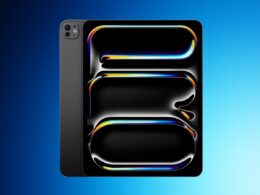
The professional lineup is no exception. The stunning iPad Pro models, equipped with the M5 chip and OLED displays, have experienced hikes reaching an additional $300 on the highest storage versions. Considering that many users purchase the Magic Keyboard and Apple Pencil separately (accessories that, fortunately, have not increased in price), the total cost of owning a professional-level iPad has dangerously approached the price of a high-end laptop.
Other Affected Devices in the Catalog
The impact of component shortages doesn’t discriminate. Other company devices that rely on fast storage and memory have also been retagged:
- Mac mini: The M4 Pro chip version has gone up $200, sitting at $1,599. Additionally, the basic 256GB model that had disappeared has returned, but at $799 (previously $599).
- Mac Studio: The quintessential desktop workstation. The M4 Max model jumped $500, and the extreme version with the M3 Ultra experienced a massive $1,300 increase (going from $3,999 to $5,299).
- HomePod and Apple TV: The HomePod mini rises to $129, the full-size HomePod to $349, and the Apple TV leaps from $129 to $199.
- Vision Pro: The revolutionary spatial computing headset adds $200 to its already steep starting price, landing at $3,699.
Interestingly, the iPhone, Apple Watch, and AirPods lines have remained intact for now. Experts speculate this is because these devices use lower-density memory modules or because the company has locked-in, long-term supply contracts that still protect the iPhone’s margins.
Community Reaction and the Stock Market
Discontent among the user base was swift. Tech forums, including MacRumors, are ablaze with comments from frustrated users. Those who bought a MacBook Pro or a Macbook Air last week are celebrating their luck, while those waiting for the back-to-school season feel punished.
Wall Street hasn’t reacted positively to the news either. Following the announcement of the Apple price increase, the company’s stock (AAPL) suffered a 6% drop at the market close, marking its worst trading day since April 2025. Investors fear this sudden hike will curb sales in a historically crucial quarter.
Purchasing Strategies: What to Do From Now On?
If you are passionate about the brand and need to upgrade your devices soon, this new scenario requires cunning. Here are some strategies to mitigate the impact of this increase:
- Explore Third-Party Retailers Immediately: Authorized resellers like Amazon or Best Buy usually have inventory acquired at the old prices. As long as they have pre-June 25 stock, you might find a Macbook Air or an iPad at its original price. However, these units will disappear in a matter of days or hours.
- The Refurbished Market: Historically, Apple’s refurbished store has been a safe haven for scoring 15% discounts. Unfortunately, the company has also adjusted the pricing of this section today, raising Macs by an average of $200. Even so, it remains cheaper than buying new.
- Evaluate Real Storage Needs: Since the price increase exponentially affects models with more RAM and SSD space, users will have to be more critical. It might no longer be viable to buy a MacBook Pro with 2TB of storage “just in case”; now, combining a base model with external SSDs (which have also gone up, but not at the corporate level) will be the dominant strategy.
- Extend the Life of Your Current Device: If your current machine still performs, maybe it’s time to replace the battery and wait it out. Micron has indicated that the memory crisis will stretch through all of 2026 and part of 2027. Although Apple has promised it is working “tirelessly” to find solutions, it’s unlikely we’ll see official price drops until the next decade.
Conclusion: A New Reality for the Apple User
We are facing one of the highest barriers to entry in the history of premium consumer computing. The Apple price increase underscores how deeply interconnected the tech world is. The boom in artificial intelligence, which for many average users is just a cloud-based tool, has had a direct physical and financial impact on the tools we use daily.
The Macbook Neo, the iPad, the Macbook Air, and the all-powerful MacBook Pro objectively remain undisputed leaders in their respective categories thanks to the efficiency of Apple Silicon, their battery durability, and the majesty of their displays. The quality of the products hasn’t diminished, but the financial justification for upgrading every two years has evaporated.
As tech fans, we will continue to appreciate the flawless ecosystem, industrial design, and reliability that characterize the brand. But starting today, the decision to buy a device bearing the bitten Apple logo requires much deeper reflection and, above all, a considerably better-prepared wallet. Being a user of the Californian company has always implied paying a premium for excellence; right in the middle of 2026, that price has just reached historic levels.