



The tech world is about to witness one of the most significant events of the last decade in the mobile phone sector. After years of intense speculation, leaked patents, discarded prototypes, and rumors changing almost daily, it seems the big moment has finally arrived. Apple, the Cupertino company that forever revolutionized how we communicate, is ready to take its next great evolutionary leap. We are talking about the highly anticipated foldable iPhone, a device that promises not only to completely change how we interact with the Apple ecosystem but also seeks to redefine the standards of the tech luxury industry.
Known among experts and supply chains as the iPhone Ultra, this innovative handset represents much more than a simple response to the competition that has been experimenting with flexible screens for years. For Apple, the philosophy has always been clear: it is not about being the first to market, but being the best when they decide to enter. And everything points to this September being the moment the company will demonstrate exactly why they have waited so long to present their ultimate vision of a foldable device.
The Highly Anticipated September Launch: Goodbye to Delay Rumors
Over the past few months, the tech community has lived on a constant rollercoaster of information. Major analysts and specialized media even claimed that the development of Apple’s first foldable iPhone was suffering from serious engineering setbacks, suggesting its launch would inevitably be delayed until 2027. There was talk of durability issues with the hinge and difficulties in achieving a screen that met the brand’s demanding quality standards.
However, the latest and most reliable news coming directly from the heart of the assembly lines has turned this narrative 180 degrees. Asian suppliers have begun receiving final guidelines and have started delivering components in small batches, confirming that the iPhone Ultra remains firmly on track to make its stellar debut in September. This means the flexible phone will share the stage at the traditional autumn Keynote alongside the brand’s next generation of conventional devices. Far from shying away from production challenges, Apple has stepped on the gas to ensure its most ambitious device to date sees the light of day this very year, dispelling any doubts about its short-term commercial viability.
iPhone Ultra Design and Display: Engineering Pushed to the Limit
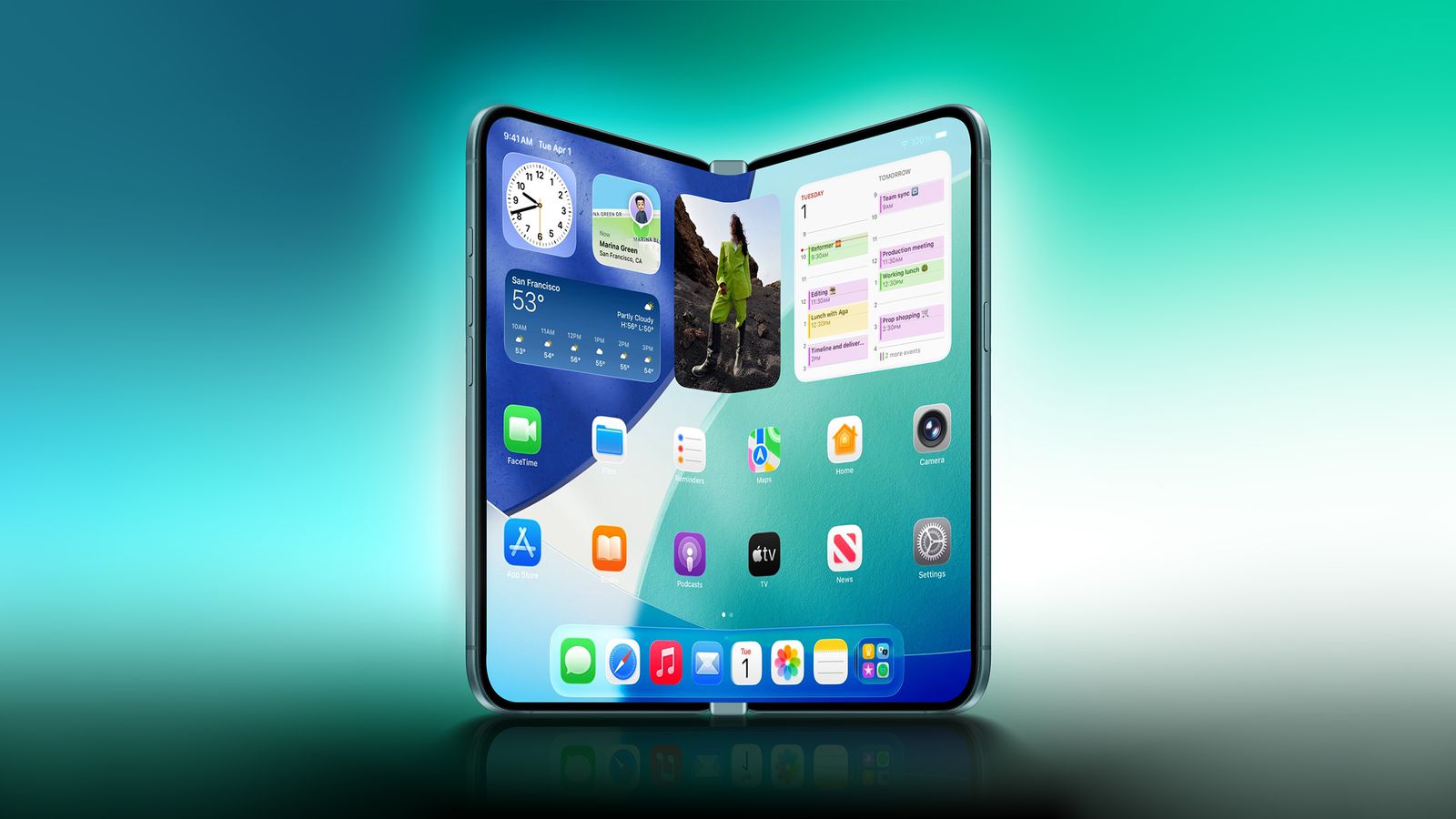
If there is one thing Apple is globally renowned for, it is its obsessive attention to detail in industrial design, and the iPhone Ultra will be the ultimate expression of this quality. Unlike other “clamshell” formats on the market, the brand has opted for a book-style design, transforming the smartphone into a sort of compact tablet when fully opened.
On the outside, the device will feature a front screen of approximately 5.5 inches, a perfect size for handling notifications, replying to messages, and performing daily tasks with one hand without feeling like we are carrying a bulky device. But the real magic will happen when unfolding the terminal, revealing an impressive 7.8-inch inner panel. This continuous screen, with a 4:3 aspect ratio similar to that of a smaller iPad, is designed to offer an unprecedented immersive experience on an iPhone.
One of the biggest headaches in the flexible phone industry has been the dreaded “crease” or central fold on the screen. According to the latest technical reports, Apple has invested incalculable resources into developing a new material and an over-engineered hinge mechanism so that the crease is practically imperceptible to both sight and touch, with an estimated depth of less than 0.15 millimeters.
To maintain the structural integrity of the foldable iPhone without turning it into a heavy brick, the company will bet on a sophisticated combination of materials. It is expected that the main chassis and the parts subjected to the greatest mechanical stress will be made of aerospace-grade titanium, ensuring the device does not bend by accident. On the other hand, aluminum will be used in strategic internal components to improve thermal dissipation and keep the total weight under control.
Inner Power: The Performance of the First Foldable iPhone
To power two high-resolution screens and manage a complex multitasking interface, an engine with colossal power is required. This is where the iPhone Ultra will shine brightly, as it will integrate the most advanced processor ever created by the brand: the rumored A20 chip, manufactured using a revolutionary 2-nanometer process. This processor will not only guarantee absolute fluidity when navigating the interface but will also offer crucial energy efficiency for a device that has such a large inner screen to power.
Accompanying this technological marvel, we will find no less than 12 GB of RAM, a record figure for an iPhone, which will ensure that apps remain open in the background without unexpected closures. Furthermore, the device is expected to debut the new C2 modem, designed to maximize connection speeds on next-generation networks and ensure that streaming content or high-definition video calls are flawless experiences, no matter where you are.
iOS and the Revolution of Adaptive Software
The most powerful hardware in the world is useless if it doesn’t have an operating system capable of squeezing out its capabilities, and Apple is fully aware of this. With the arrival of the iPhone Ultra, we will see a deeply adapted version of iOS, designed specifically to take advantage of the new foldable form factor.
Given that the 7.8-inch inner screen gets dangerously close to tablet territory, the software is expected to incorporate advanced multitasking features that, until now, were exclusive to the iPad. For the first time in iPhone history, users will be able to natively and comfortably run two apps side-by-side in split-screen mode. Imagine reading a lengthy financial report on one half of the screen while taking notes or debating on a video call on the other half; the foldable iPhone promises to take mobile productivity to a completely new level, blurring the line that has separated smartphones from portable work tools until now.
Camera System and the Surprising Return of Touch ID
The photographic section will also undergo interesting adaptations due to the physical nature of the device. While the rear will maintain a top-quality camera module (presumably with two state-of-the-art main sensors), we will see the most radical changes in biometrics and front-facing cameras.
Due to the complexity of integrating the multiple sensors needed for facial recognition into a flexible screen that must close perfectly upon itself, all signs point to Apple ditching Face ID on the inner panel. Instead, the iPhone Ultra will mark the triumphant return of Touch ID, but not on the classic home button. It will be integrated directly into the side power button, an ergonomic and fast move that we have already seen work perfectly on other Apple ecosystem devices. Additionally, users could benefit from an under-display camera on the inner panel, eliminating any type of notch or hole-punch and offering a 100 percent uninterrupted viewing surface.
Colors, Exclusivity, and Price: Who is the iPhone Ultra For?
Like any first generation of a revolutionary Apple product, the iPhone Ultra will not be for every budget. The development of technologies such as the invisible hinge, the flexible panel, and the titanium frame significantly drive up production costs. Therefore, it is estimated that the starting price of this device will easily exceed the $2,000 barrier, consolidating it as an item of true luxury and technological avant-garde.
In line with this premium and exclusive positioning, aesthetic options will be deliberately understated. To minimize complexity in an already challenging production chain, Apple will launch this device in a very restricted color palette, likely limiting itself to classic and elegant finishes like white and matte black. This strategy of scarcity and sobriety is not new; we saw a similar approach with the launch of the iPhone X, seeking to convey a sense of purity in design and exclusivity without chromatic distractions. Initial units will be limited, which will almost certainly cause the phone to sell out within minutes on pre-order day.
The Impact on the Future of Smartphones
The imminent arrival of this handset is not just a victory for fans of the brand but a catalyst for the entire mobile technology industry. Although competing companies have been selling foldable devices for years, massive adoption by the average consumer still faces certain barriers of distrust. When a company with the weight, influence, and marketing muscle of Apple decides it is the right time to launch a foldable iPhone, the entire market pays attention.
The iPhone Ultra has the potential to definitively legitimize the foldable format, setting a new quality standard in terms of durability, hardware-software integration, and user experience. It will force competitors to further refine their own devices and accelerate innovation in key components like flexible batteries and ultra-thin glass.
Conclusion
We are on the threshold of a historic moment for telephony. September will not only bring us the annual updates we are accustomed to, but it will also introduce what will likely be the brand’s most important device of the last half-decade. The iPhone Ultra is not just a phone that bends; it is a statement of intent, a display of precision engineering, and a window into the future of pocket computing.
With its titanium design, its astonishing uninterrupted screen, the brute performance of the brand’s new silicon, and an operating system reinvented for multitasking, this foldable iPhone is destined to become the new object of desire for tech enthusiasts, demanding professionals, and design lovers alike. The countdown to September has begun, and the whole world is holding its breath to witness how Apple reinvents the mobile phone once again.