


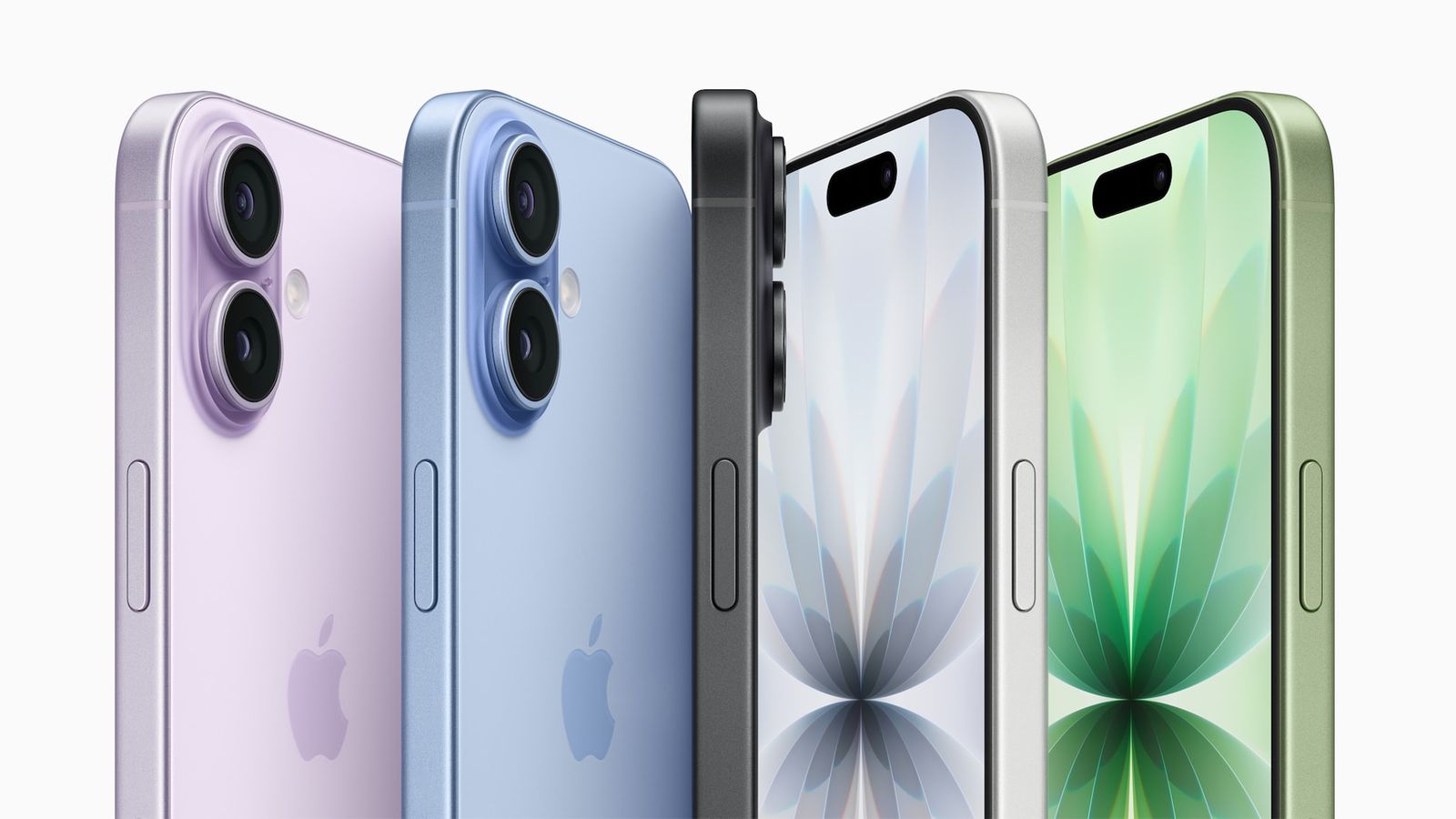

The open secret dominating conversations is fascinating: the upcoming standard iPhone 18, the model the vast majority of users choose by default, will take a historic leap in its specifications. The big headline? The incorporation of 12 GB of RAM.
In this extensive article, which will serve as your ultimate tutorial and analysis guide, we are going to break down this news piece by piece. We won’t stay on the surface; we will understand on a technical level what this amount of memory means for you as an Apple user, why memory architecture has become the most critical component of the decade, and how this monumental shift in the iPhone 18 will rewrite the rules of what we expect from a smartphone. Prepare your favorite drink, because we are going to journey into the heart of Apple‘s silicon.
1. The Evolutionary Leap: The Arrival of 12 GB of RAM to the Base Model
For a long time, those of us who closely follow Apple have grown accustomed to very clear segmentation. The “Pro” models have always hoarded the juiciest innovations: titanium, periscope lenses, 120Hz ProMotion displays, and, of course, a higher capacity of RAM for extreme multitasking. The base models, while incredibly reliable, always maintained a more conservative technical profile.
However, industry data points to the standard iPhone 18 breaking this tradition by integrating 12 GB of RAM right out of the box.
Let’s put this into historical perspective. Not long ago, the base iPhone 15 operated with 6 GB. The 16 and 17 generations raised the standard to 8 GB to support the foundations of the brand’s artificial intelligence. But taking the leap to 12 GB of RAM in the entry-level iPhone 18 represents a 50% increase over its predecessor. It is an unprecedented raw upgrade in the company’s recent history.
What has motivated Apple to be so generous with the specs of its most accessible model? The answer is the greatest computational challenge of our era: locally executed Artificial Intelligence.
2. Hardware Tutorial: Understanding the iPhone’s Unified Memory
To properly gauge the importance of the iPhone 18, it is vital to take a small technical detour and explain how Applemanages memory in its devices. If you come from the world of traditional PCs, you should know that here, the rules of physics and architecture work very differently. We are talking about “Unified Memory” (Unified Memory Architecture).
The Magic of Total Integration
In a classic system, the processor (CPU) has its own RAM, and the graphics card (GPU) has its own dedicated VRAM. If both need to work with the same file or graphic, the data must be copied back and forth, creating latency and consuming a lot of battery.
In your iPhone, the RAM is part of the same chip (the SoC or System on a Chip). The CPU, GPU, and Neural Engine share the exact same “pool” of memory. When the iPhone 18 arrives with its 12 GB of RAM, it will mean that any component on the chip can instantly and simultaneously access a massive canvas of data, without loading times or inefficient transfers.
The End of the Myth: “Optimization is Everything”
Over the last decade, iOS users boasted that our phones could outperform Android competitors with half the memory. Apple‘s legendary optimization, which aggressively froze background apps, made 4 GB or 6 GB feel infinite.
But the game has changed. Smoothness when scrolling through a social network has already been mastered. The real challenge today is keeping immense Large Language Models (LLMs) active. These neural networks cannot be magically “compressed” or “frozen” without losing their usefulness; they need actual physical space in the RAM to exist and reason in milliseconds.
3. Artificial Intelligence: The Insatiable Memory Devourer
Apple‘s strategy with its artificial intelligence is radically different from its competitors. While other companies base their model on sending your voice, photos, and emails to massive external servers, Apple has staked its reputation on privacy. Its goal is for your iPhone to be able to understand you, draft texts for you, and search for complex information by processing the data on-device, meaning locally right in your pocket.
Why 12 GB is the Key to Success
Here lies the core of this tutorial. An AI model capable of understanding human context is made up of billions of parameters. For your virtual assistant to read what’s on your screen, suggest smart replies, and create images without an internet connection, that entire model must be “awake” in the RAM.
- If an AI model weighs about 4 GB.
- If the iOS operating system needs about 3 GB to run smoothly.
- With an 8 GB phone, you have barely 1 GB left for your apps, games, and camera.
The result with low RAM is a choked system that constantly has to close Spotify or Safari in the background. By equipping the iPhone 18 with 12 GB of RAM, Apple is building a massive safety margin. It ensures that the phone can run the most advanced artificial intelligence models invisibly in the background while you play AAA titles or edit 4K video in the foreground.
4. Strategic Buying Guide: The Upgrade Cycle Dilemma
If you are someone who upgrades their device every three or four years, this leak about the 12 GB of RAM is the most valuable piece of information you can have today to plan your next purchase.
The Current Situation (The Baseline): Models prior to the iPhone 18, equipped with 8 GB of unified memory, are excellent and will meet the initial requirements of AI. However, they represent the technical floor. As future versions of iOS introduce deeper cognitive capabilities, those 8 GB will be pushed to their limits, forcing the system to rely more on cloud processing, thereby losing the advantage of immediacy and total privacy.
The Promise of the iPhone 18 (The Long-Term Investment): The iPhone 18 is not just a yearly update; it is technological life insurance. That extra RAM makes it a future-proof device. It will handle the software of the next five or six years without breaking a sweat.
For any follower of the Apple ecosystem with an older model wondering when the ideal time is to spend their money: the iPhone 18 will be the milestone that marks a before and after in longevity. It is the frontier where hardware finally comfortably aligns with software ambitions.
5. Democratizing the Experience: The End of “Pro” Exclusivity
A fascinating aspect of this news is how it alters the company’s commercial strategy. Traditionally, Apple has used memory as a lever for upselling; that is, tempting you to spend more money on a “Pro” model if you wanted the phone to last you more years.
But artificial intelligence has broken that mold. For Apple‘s AI ecosystem to succeed, it needs massive adoption. Developers won’t create incredible AI-based apps if only 15% of users (those who buy Pro models) have the hardware to run them.
By including 12 GB of RAM in the base iPhone 18, Apple is saying: Our artificial intelligence is for everyone. The core experience, the “brain” of the device, will be just as capable for a student buying the entry-level model as for a professional buying the most expensive version.
Future Pro models will surely continue to justify their price with innovations in spatial video capture, faster LiDAR sensors, brighter screens, and premium finishes. But the gap in the cognitive performance of the phone will disappear.
6. Financial Engineering: Will It Cost Us More?
It is natural to wonder: if RAM is one of the most expensive semiconductors to assemble, will we see a drastic price increase for the iPhone 18?
Industry experts suggest the answer is no. Apple has unmatched purchasing power in the tech market. By securing multi-year contracts with memory manufacturing giants (like Micron or SK Hynix), they achieve volume pricing unattainable for other brands.
Furthermore, it is highly likely that Apple will balance manufacturing costs. To be able to offer the 12 GB of RAMwithout raising the final price for the consumer, the standard iPhone 18 might inherit components that have already been amortized from previous generations, such as certain display configurations or slightly modified versions of the Bionic processors. From a user’s perspective, this is an excellent trade-off: sacrificing an experimental refresh rate in exchange for an amount of memory that will guarantee the device does not become obsolete.
7. Preparing for the New Era: What Will You Notice?
The theory is great, but how will these 12 GB of RAM translate into the palm of your hand when you finally turn on your iPhone 18?
- Multitasking Without Amnesia: Has it ever happened that you are filling out a form in Safari, switch to WhatsApp for a second to check a detail, return to Safari, and the page reloads, erasing everything you wrote? That is a lack of RAM. With 12 GB, that technological “amnesia” will disappear. You will be able to leave dozens of apps open and return to them hours later exactly where you left off.
- On-the-Fly Creation and Editing: Heavy apps like LumaFusion, Final Cut Pro for iPad (if it gets an iPhone adaptation), or Adobe Lightroom will be able to export massive files at astonishing speeds because the processor will have all the footage right there in the unified memory.
- Constant Assistance: Your phone will be passively analyzing your context. It will know which emails are urgent, automatically schedule appointments by reading your messages, and draft complex replies without a single stutter in the interface—something physically impossible on devices with low memory.
8. Conclusion: The Dawn of a New Giant
Often, consumer technology advances in steps so small we barely notice the difference from one year to the next. It’s easy to become cynical about annual keynotes. However, on rare occasions, the industry takes a true leap.
The integration of 12 GB of RAM into the standard iPhone 18 is one of those rare moments. It is an implicit admission by Apple that we are entering a new computational era. The days when the phone was just a screen to connect to the internet are over; we are witnessing the arrival of pocket supercomputing.
Having that immense amount of unified memory will be the difference between using a tool and having a real assistant. It will ensure your privacy remains intact by processing your data locally, and it will provide a giant runway for all the artificial intelligence features Apple has planned for the end of the decade.